
In high-performance outerwear, the fabric is only 50% of the waterproof story. For an OEM manufacturer like WildExplores, the true test of engineering happens at the needle holes. Seam sealing—the process of applying waterproof tape over sewn seams—is what separates a water-resistant garment from a professional-grade storm shell.
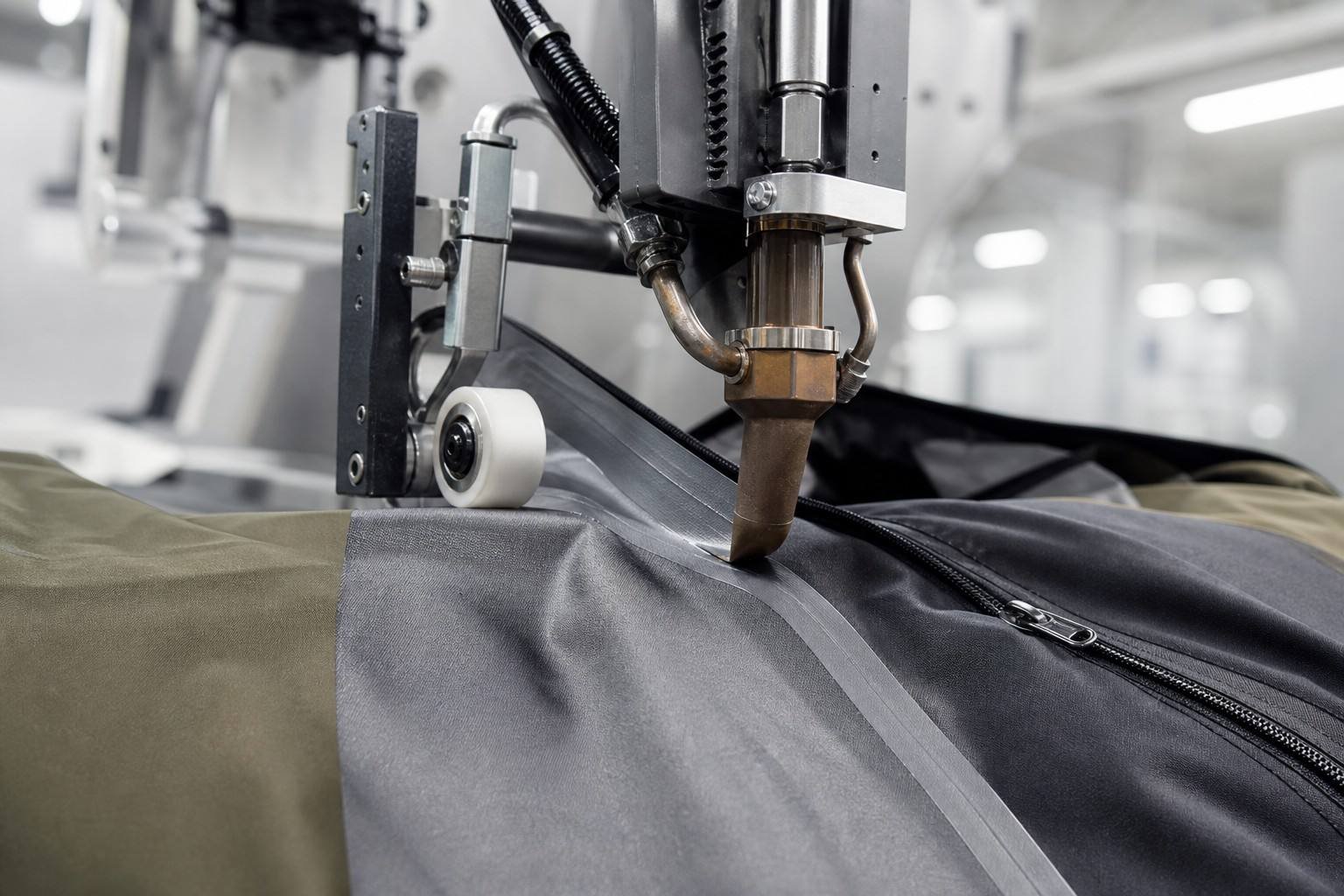
1. The Hot-Air Taping Process: Precision Engineering
We utilize advanced hot-air seam sealing machines to apply a multi-layer technical tape over every internal seam. The machine precisely controls:
- Nozzle Temperature: To melt the adhesive without damaging the TPU membrane.
- Pressure Speed: Ensuring the tape is forced into the fabric’s texture for a permanent bond.
2. Fully Taped vs. Critically Taped: Specifying for the Market
B2B buyers must decide between two primary construction levels based on the target price point:
- Fully Taped: Every single seam (neckline, armholes, side seams) is sealed. Required for 10,000mm+ waterproof ratings.
- Critically Taped: Only “exposed” seams (shoulders, hood, chest) are sealed. A cost-effective solution for urban lifestyle jackets.
3. Tape Materials: Matching the Fabric
Selecting the right tape is critical for longevity. We match the tape chemistry to the fabric’s membrane:
- PU/TPU Tapes: For 2-layer and 3-layer laminates.
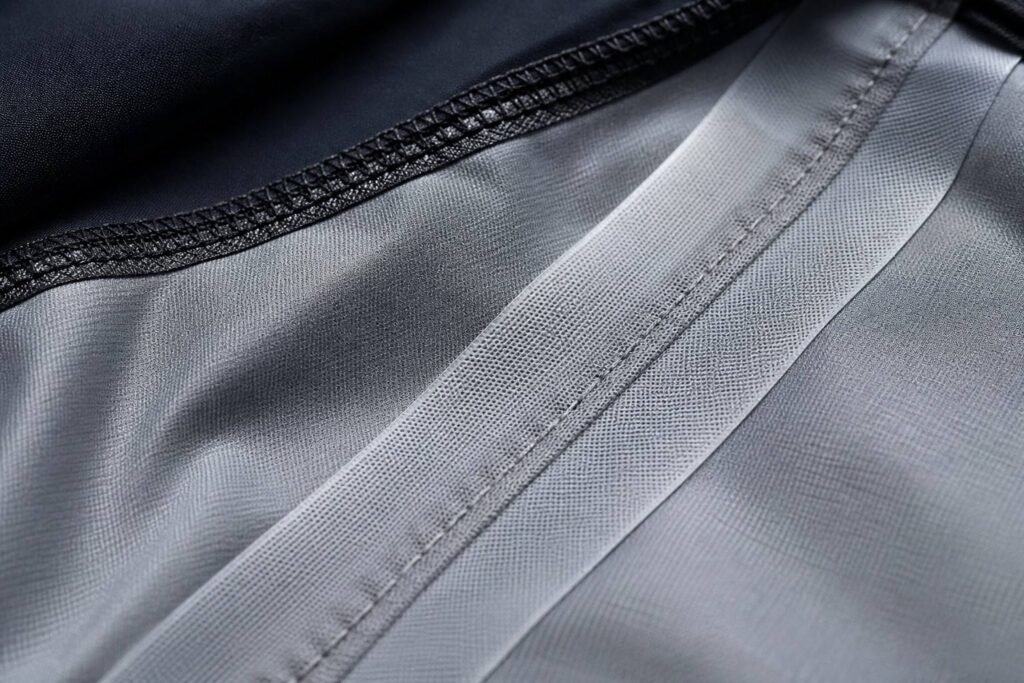
- 3-Layer Tricot Tapes: Features a fabric backer that blends seamlessly with the jacket’s interior lining.
4. Quality Control: The Seam Strength & Water Pressure Test
Every production run at WildExplores undergoes rigorous testing:
- Hydrostatic Test on Seams: We test the tape junction under pressure to ensure zero leakage at the “cross-seams” (where multiple seams meet).
- Wash Cycle Durability: Ensuring the tape does not peel or degrade after 20+ industrial wash cycles.